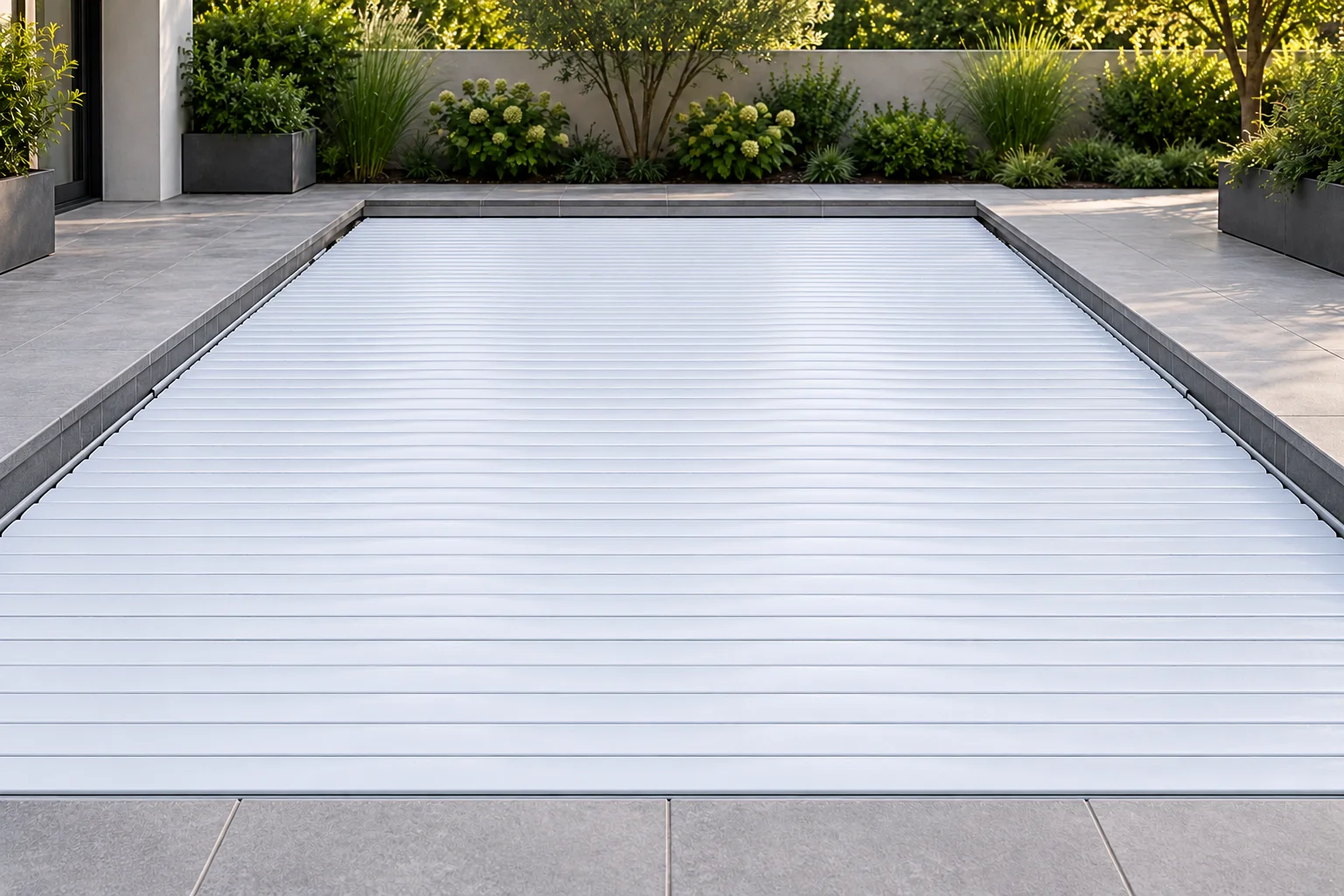
Start with the Instructions for Your Exact Cover
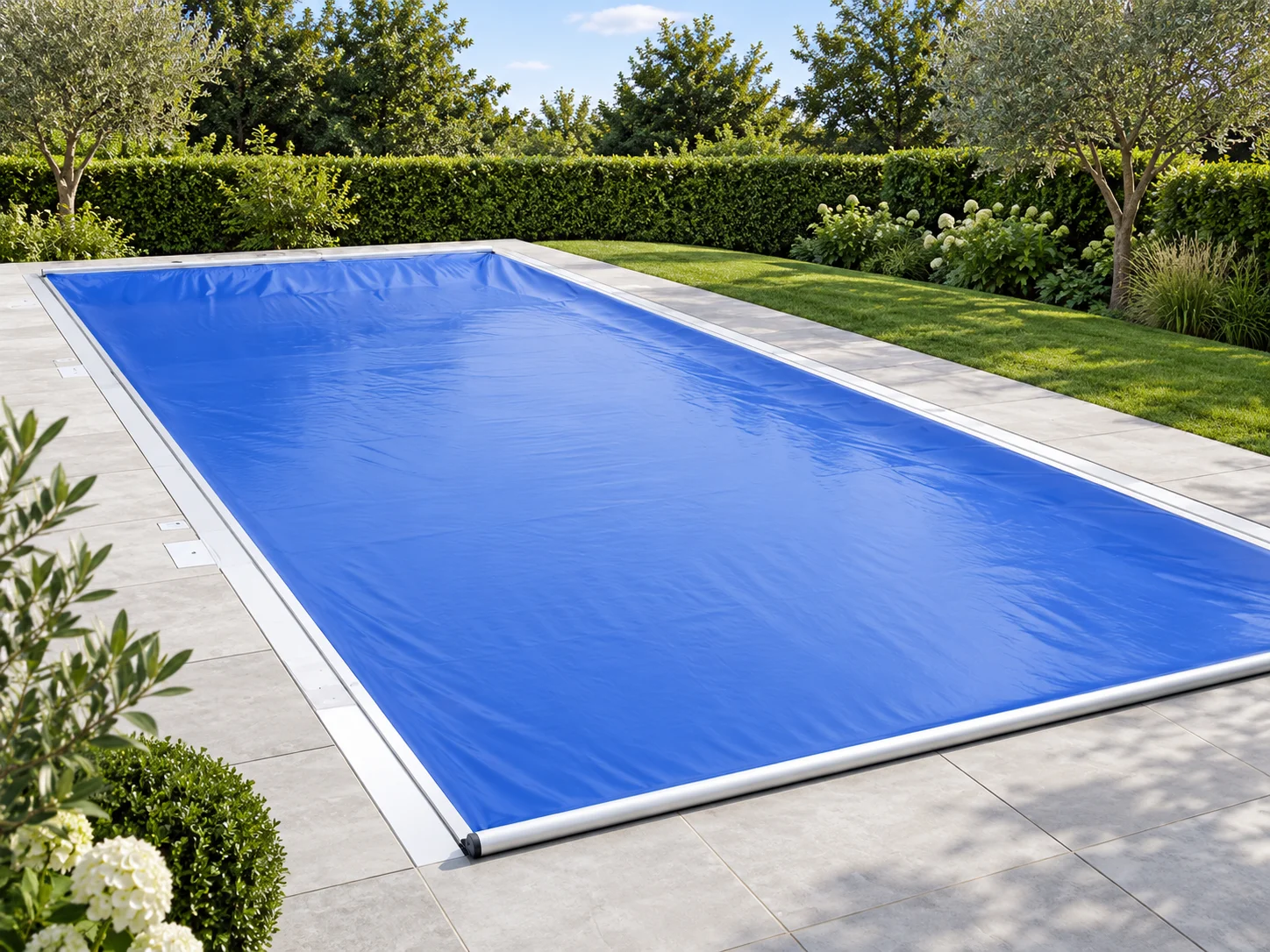
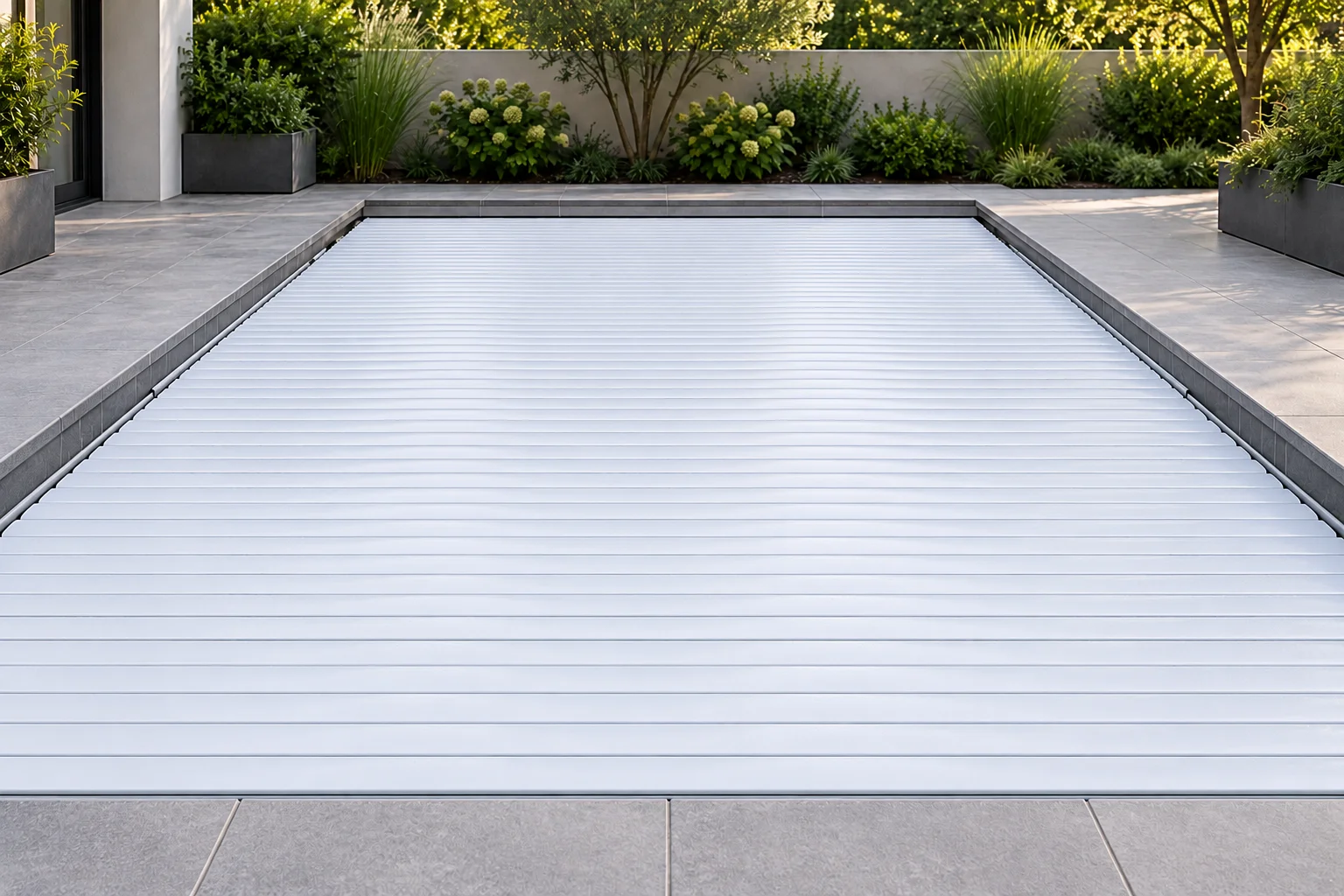
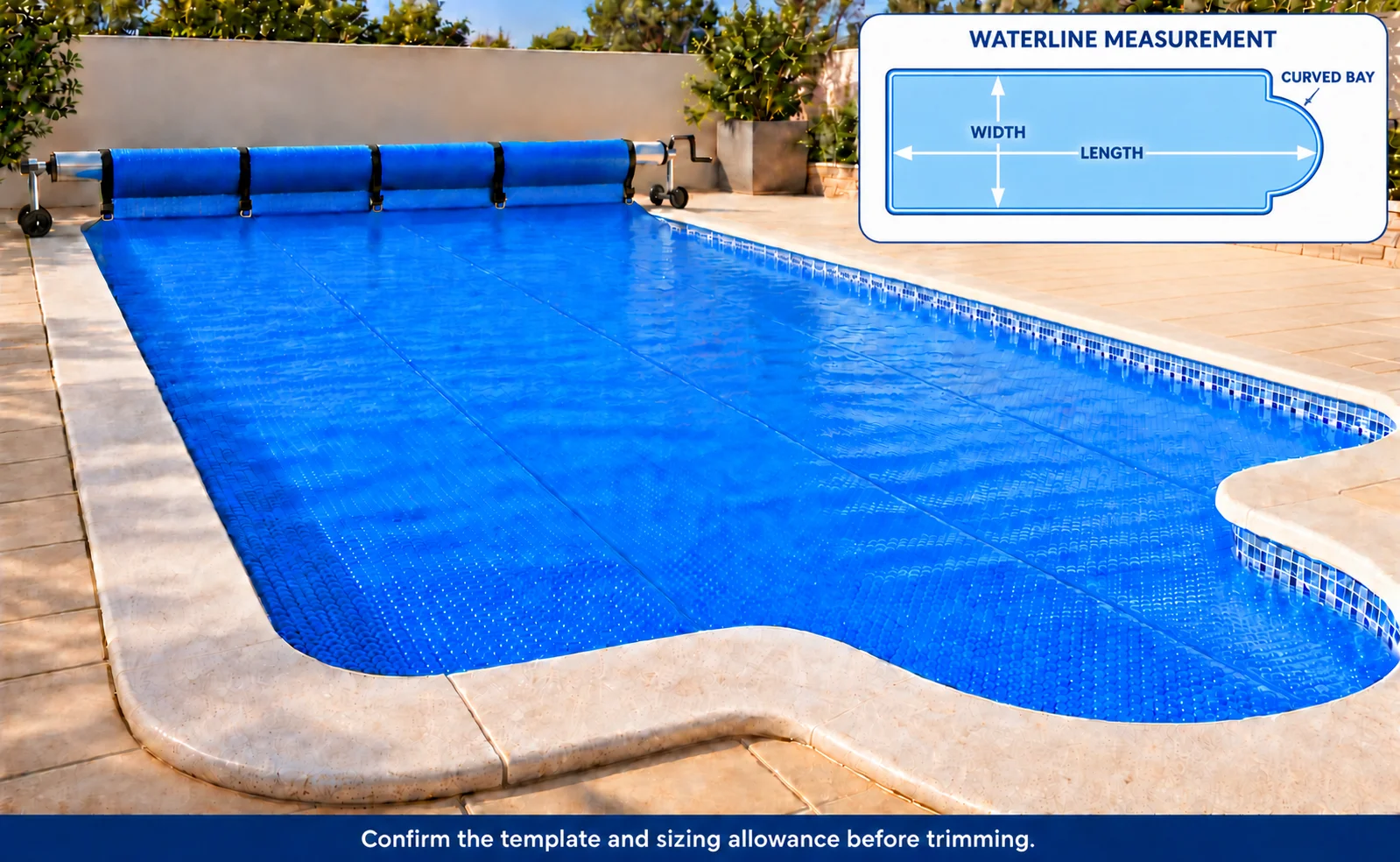
Fabric, floating slats, rigid shutters, moving decks and simple sheet covers do not share one maintenance routine. Find the instructions for the supplied model and confirm the recommended checks, cleaning products and service interval with the supplier or installer. If the paperwork is missing, identify the cover before applying a cleaning method or adjusting a mechanism.
Check for Visible Wear and Obstructions
When the pool is closed and the system is in a safe state, look for visible tears, worn edges, loose stitching, unusual deformation, debris or anything that could obstruct normal movement. On systems with accessible guides or moving parts, check only what the manufacturer says an owner may inspect. Do not dismantle, adjust or force a component that appears damaged or misaligned.
Remove Debris Only in the Approved Way
Leaves and other loose debris can interfere with handling or place extra strain on a cover. Use the removal method specified for that cover; avoid dragging sharp or heavy objects across the surface. Instructions for standing water, snow, ice, pumps and seasonal storage vary by construction, so do not assume a cover can support a person, equipment or accumulated load.
Use Product-Specific Cleaning Guidance
Materials and coatings can react differently to soaps, solvents, pressure washing and pool chemicals. Confirm the permitted cleaner, water pressure, tools and drying method in the product instructions before washing. A cleaning approach recommended for one fabric or mechanism is not automatically suitable for another.
Stop and Ask for Service When Operation Changes
Unexpected resistance, noise, uneven movement, new gaps or repeated stoppages are reasons to stop operating the system and contact the responsible installer or service professional. Keep a simple record of checks and repairs. At quotation stage, ask which care instructions, replacement items and service responsibilities apply to the exact kit being supplied.